輕松過ACD-301認證的考古題 -是最有效的Appian Certified Lead Developer-ACD-301考試備考資料
Wiki Article
從Google Drive中免費下載最新的KaoGuTi ACD-301 PDF版考試題庫:https://drive.google.com/open?id=1awZCtaysPI7y-CJQQwWERPIprGu9bTmR
我們KaoGuTi Appian的ACD-301考試的做法是最徹底的,以及最準確及時的最新的實踐檢驗,你會發現目前市場上的唯一可以有讓你第一次嘗試通過困難的信心。Appian的ACD-301考試認證在世界上任何一個國家將會得到承認,所有的國家將會一視同仁,KaoGuTi Appian的ACD-301認證證書不僅有助於提高你的知識和技能,也有助於你的職業生涯在不同的條件下多出一個可能性,我們KaoGuTi Appian的ACD-301考試認證合格使用。
KaoGuTi的ACD-301資料的命中率高達100%。它可以保證每個使用過它的人都順利通過考試。當然,這也並不是說你就完全不用努力了。你需要做的就是,認真學習這個資料裏出現的所有問題。只有這樣,在考試的時候你才可以輕鬆應對。怎麼樣?KaoGuTi的資料可以讓你在準備考試時節省很多的時間。它是你通過ACD-301考試的保障。想要這個資料嗎?那就快點擊KaoGuTi的網站來購買吧。另外,你也可以在購買之前先試用一下資料的樣本。这样你就可以亲自确定资料的质量如何了。
最優質的Appian 最新ACD-301題庫資訊是行業領先材料&授權的ACD-301:Appian Certified Lead Developer
KaoGuTi是可以帶你通往成功之路的網站。KaoGuTi可以為你提供使你快速通過Appian ACD-301 認證考試的詳細培訓資料,能使你短時間內多掌握認證考試的相關知識,並且一次性的通過Appian ACD-301 認證考試。
最新的 Appian Certification Program ACD-301 免費考試真題 (Q41-Q46):
問題 #41
As part of your implementation workflow, users need to retrieve data stored in a third-party Oracle database on an interface. You need to design a way to query this information.
How should you set up this connection and query the data?
- A. Configure a Query Database node within the process model. Then, type in the connection information, as well as a SQL query to execute and return the data in process variables.
- B. Configure an expression-backed record type, calling an API to retrieve the data from the third-party database. Then, use a!queryRecordType to retrieve the data.
- C. Configure a timed utility process that queries data from the third-party database daily, and stores it in the Appian business database. Then use a!queryEntity using the Appian data source to retrieve the data.
- D. In the Administration Console, configure the third-party database as a "New Data Source." Then, use a!queryEntity to retrieve the data.
答案:D
解題說明:
Comprehensive and Detailed In-Depth Explanation:
As an Appian Lead Developer, designing a solution to query data from a third-party Oracle database for display on an interface requires secure, efficient, and maintainable integration. The scenario focuses on real-time retrieval for users, so the design must leverage Appian's data connectivity features. Let's evaluate each option:
A . Configure a Query Database node within the process model. Then, type in the connection information, as well as a SQL query to execute and return the data in process variables:
The Query Database node (part of the Smart Services) allows direct SQL execution against a database, but it requires manual connection details (e.g., JDBC URL, credentials), which isn't scalable or secure for Production. Appian's documentation discourages using Query Database for ongoing integrations due to maintenance overhead, security risks (e.g., hardcoding credentials), and lack of governance. This is better for one-off tasks, not real-time interface queries, making it unsuitable.
B . Configure a timed utility process that queries data from the third-party database daily, and stores it in the Appian business database. Then use a!queryEntity using the Appian data source to retrieve the data:
This approach syncs data daily into Appian's business database (e.g., via a timer event and Query Database node), then queries it with a!queryEntity. While it works for stale data, it introduces latency (up to 24 hours) for users, which doesn't meet real-time needs on an interface. Appian's best practices recommend direct data source connections for up-to-date data, not periodic caching, unless latency is acceptable-making this inefficient here.
C . Configure an expression-backed record type, calling an API to retrieve the data from the third-party database. Then, use a!queryRecordType to retrieve the data:
Expression-backed record types use expressions (e.g., a!httpQuery()) to fetch data, but they're designed for external APIs, not direct database queries. The scenario specifies an Oracle database, not an API, so this requires building a custom REST service on the Oracle side, adding complexity and latency. Appian's documentation favors Data Sources for database queries over API calls when direct access is available, making this less optimal and over-engineered.
D . In the Administration Console, configure the third-party database as a "New Data Source." Then, use a!queryEntity to retrieve the data:
This is the best choice. In the Appian Administration Console, you can configure a JDBC Data Source for the Oracle database, providing connection details (e.g., URL, driver, credentials). This creates a secure, managed connection for querying via a!queryEntity, which is Appian's standard function for Data Store Entities. Users can then retrieve data on interfaces using expression-backed records or queries, ensuring real-time access with minimal latency. Appian's documentation recommends Data Sources for database integrations, offering scalability, security, and governance-perfect for this requirement.
Conclusion: Configuring the third-party database as a New Data Source and using a!queryEntity (D) is the recommended approach. It provides direct, real-time access to Oracle data for interface display, leveraging Appian's native data connectivity features and aligning with Lead Developer best practices for third-party database integration.
Appian Documentation: "Configuring Data Sources" (JDBC Connections and a!queryEntity).
Appian Lead Developer Certification: Data Integration Module (Database Query Design).
Appian Best Practices: "Retrieving External Data in Interfaces" (Data Source vs. API Approaches).
問題 #42
You are taking your package from the source environment and importing it into the target environment.
Review the errors encountered during inspection:
What is the first action you should take to Investigate the issue?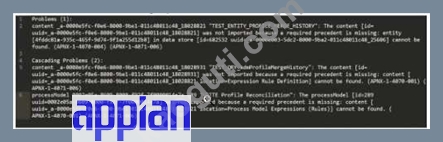
- A. Check whether the object (UUID ending in 25606) is included in this package
- B. Check whether the object (UUID ending in 18028821) is included in this package
- C. Check whether the object (UUD ending in 7t00000i4e7a) is included in this package
- D. Check whether the object (UUID ending in 18028931) is included in this package
答案:C
解題說明:
The error log provided indicates issues during the package import into the target environment, with multiple objects failing to import due to missing precedents. The key error messages highlight specific UUIDs associated with objects that cannot be resolved. The first error listed states:
"'TEST_ENTITY_PROFILE_MERGE_HISTORY': The content [id=uuid-a-0000m5fc-f0e6-8000-9b01-011c48011c48, 18028821] was not imported because a required precedent is missing: entity [uuid=a-0000m5fc-f0e6-8000-9b01-011c48011c48, 18028821] cannot be found..." According to Appian's Package Deployment Best Practices, when importing a package, the first step in troubleshooting is to identify the root cause of the failure. The initial error in the log points to an entity object with a UUID ending in 18028821, which failed to import due to a missing precedent. This suggests that the object itself or one of its dependencies (e.g., a data store or related entity) is either missing from the package or not present in the target environment.
Option A (Check whether the object (UUID ending in 18028821) is included in this package): This is the correct first action. Since the first error references this UUID, verifying its inclusion in the package is the logical starting point. If it's missing, the package export from the source environment was incomplete. If it's included but still fails, the precedent issue (e.g., a missing data store) needs further investigation.
Option B (Check whether the object (UUID ending in 7t00000i4e7a) is included in this package): This appears to be a typo or corrupted UUID (likely intended as something like "7t000014e7a" or similar), and it's not referenced in the primary error. It's mentioned later in the log but is not the first issue to address.
Option C (Check whether the object (UUID ending in 25606) is included in this package): This UUID is associated with a data store error later in the log, but it's not the first reported issue.
Option D (Check whether the object (UUID ending in 18028931) is included in this package): This UUID is mentioned in a subsequent error related to a process model or expression rule, but it's not the initial failure point.
Appian recommends addressing errors in the order they appear in the log to systematically resolve dependencies. Thus, starting with the object ending in 18028821 is the priority.
問題 #43
You are just starting with a new team that has been working together on an application for months. They ask you to review some of their views that have been degrading in performance. The views are highly complex with hundreds of lines of SQL. What is the first step in troubleshooting the degradation?
- A. Go through all of the tables one by one to identify which of the grouped by, ordered by, or joined keys are currently indexed.
- B. Go through the entire database structure to obtain an overview, ensure you understand the business needs, and then normalize the tables to optimize performance.
- C. Browse through the tables, note any tables that contain a large volume of null values, and work with your team to plan for table restructure.
- D. Run an explain statement on the views, identify critical areas of improvement that can be remediated without business knowledge.
答案:D
解題說明:
Comprehensive and Detailed In-Depth Explanation:
Troubleshooting performance degradation in complex SQL views within an Appian application requires a systematic approach. The views, described as having hundreds of lines of SQL, suggest potential issues with query execution, indexing, or join efficiency. As a new team member, the first step should focus on quickly identifying the root cause without overhauling the system prematurely. Appian's Performance Troubleshooting Guide and database optimization best practices provide the framework for this process.
Option B (Run an explain statement on the views, identify critical areas of improvement that can be remediated without business knowledge):
This is the recommended first step. Running an EXPLAIN statement (or equivalent, such as EXPLAIN PLAN in some databases) analyzes the query execution plan, revealing details like full table scans, missing indices, or inefficient joins. This technical analysis can identify immediate optimization opportunities (e.g., adding indices or rewriting subqueries) without requiring business input, allowing you to address low-hanging fruit quickly. Appian encourages using database tools to diagnose performance issues before involving stakeholders, making this a practical starting point as you familiarize yourself with the application.
Option A (Go through the entire database structure to obtain an overview, ensure you understand the business needs, and then normalize the tables to optimize performance):
This is too broad and time-consuming as a first step. Understanding business needs and normalizing tables are valuable but require collaboration with the team and stakeholders, delaying action. It's better suited for a later phase after initial technical analysis.
Option C (Go through all of the tables one by one to identify which of the grouped by, ordered by, or joined keys are currently indexed):
Manually checking indices is useful but inefficient without first knowing which queries are problematic. The EXPLAIN statement provides targeted insights into index usage, making it a more direct initial step than a manual table-by-table review.
Option D (Browse through the tables, note any tables that contain a large volume of null values, and work with your team to plan for table restructure):
Identifying null values and planning restructures is a long-term optimization strategy, not a first step. It requires team input and may not address the immediate performance degradation, which is better tackled with query-level diagnostics.
Starting with an EXPLAIN statement allows you to gather data-driven insights, align with Appian's performance troubleshooting methodology, and proceed with informed optimizations.
問題 #44
You need to design a complex Appian integration to call a RESTful API. The RESTful API will be used to update a case in a customer's legacy system.
What are three prerequisites for designing the integration?
- A. Understand the different error codes managed by the API and the process of error handling in Appian.
- B. Understand the business rules to be applied to ensure the business logic of the data.
- C. Understand whether this integration will be used in an interface or in a process model.
- D. Define the HTTP method that the integration will use.
- E. Understand the content of the expected body, including each field type and their limits.
答案:A,D,E
解題說明:
Comprehensive and Detailed In-Depth Explanation:
As an Appian Lead Developer, designing a complex integration to a RESTful API for updating a case in a legacy system requires a structured approach to ensure reliability, performance, and alignment with business needs. The integration involves sending a JSON payload (implied by the context) and handling responses, so the focus is on technical and functional prerequisites. Let's evaluate each option:
A . Define the HTTP method that the integration will use:
This is a primary prerequisite. RESTful APIs use HTTP methods (e.g., POST, PUT, GET) to define the operation-here, updating a case likely requires PUT or POST. Appian's Connected System and Integration objects require specifying the method to configure the HTTP request correctly. Understanding the API's method ensures the integration aligns with its design, making this essential for design. Appian's documentation emphasizes choosing the correct HTTP method as a foundational step.
B . Understand the content of the expected body, including each field type and their limits:
This is also critical. The JSON payload for updating a case includes fields (e.g., text, dates, numbers), and the API expects a specific structure with field types (e.g., string, integer) and limits (e.g., max length, size constraints). In Appian, the Integration object requires a dictionary or CDT to construct the body, and mismatches (e.g., wrong types, exceeding limits) cause errors (e.g., 400 Bad Request). Appian's best practices mandate understanding the API schema to ensure data compatibility, making this a key prerequisite.
C . Understand whether this integration will be used in an interface or in a process model:
While knowing the context (interface vs. process model) is useful for design (e.g., synchronous vs. asynchronous calls), it's not a prerequisite for the integration itself-it's a usage consideration. Appian supports integrations in both contexts, and the integration's design (e.g., HTTP method, body) remains the same. This is secondary to technical API details, so it's not among the top three prerequisites.
D . Understand the different error codes managed by the API and the process of error handling in Appian:
This is essential. RESTful APIs return HTTP status codes (e.g., 200 OK, 400 Bad Request, 500 Internal Server Error), and the customer's API likely documents these for failure scenarios (e.g., invalid data, server issues). Appian's Integration objects can handle errors via error mappings or process models, and understanding these codes ensures robust error handling (e.g., retry logic, user notifications). Appian's documentation stresses error handling as a core design element for reliable integrations, making this a primary prerequisite.
E . Understand the business rules to be applied to ensure the business logic of the data:
While business rules (e.g., validating case data before sending) are important for the overall application, they aren't a prerequisite for designing the integration itself-they're part of the application logic (e.g., process model or interface). The integration focuses on technical interaction with the API, not business validation, which can be handled separately in Appian. This is a secondary concern, not a core design requirement for the integration.
Conclusion: The three prerequisites are A (define the HTTP method), B (understand the body content and limits), and D (understand error codes and handling). These ensure the integration is technically sound, compatible with the API, and resilient to errors-critical for a complex RESTful API integration in Appian.
Appian Documentation: "Designing REST Integrations" (HTTP Methods, Request Body, Error Handling).
Appian Lead Developer Certification: Integration Module (Prerequisites for Complex Integrations).
Appian Best Practices: "Building Reliable API Integrations" (Payload and Error Management).
To design a complex Appian integration to call a RESTful API, you need to have some prerequisites, such as:
Define the HTTP method that the integration will use. The HTTP method is the action that the integration will perform on the API, such as GET, POST, PUT, PATCH, or DELETE. The HTTP method determines how the data will be sent and received by the API, and what kind of response will be expected.
Understand the content of the expected body, including each field type and their limits. The body is the data that the integration will send to the API, or receive from the API, depending on the HTTP method. The body can be in different formats, such as JSON, XML, or form data. You need to understand how to structure the body according to the API specification, and what kind of data types and values are allowed for each field.
Understand the different error codes managed by the API and the process of error handling in Appian. The error codes are the status codes that indicate whether the API request was successful or not, and what kind of problem occurred if not. The error codes can range from 200 (OK) to 500 (Internal Server Error), and each code has a different meaning and implication. You need to understand how to handle different error codes in Appian, and how to display meaningful messages to the user or log them for debugging purposes.
The other two options are not prerequisites for designing the integration, but rather considerations for implementing it.
Understand whether this integration will be used in an interface or in a process model. This is not a prerequisite, but rather a decision that you need to make based on your application requirements and design. You can use an integration either in an interface or in a process model, depending on where you need to call the API and how you want to handle the response. For example, if you need to update a case in real-time based on user input, you may want to use an integration in an interface. If you need to update a case periodically based on a schedule or an event, you may want to use an integration in a process model.
Understand the business rules to be applied to ensure the business logic of the data. This is not a prerequisite, but rather a part of your application logic that you need to implement after designing the integration. You need to apply business rules to validate, transform, or enrich the data that you send or receive from the API, according to your business requirements and logic. For example, you may need to check if the case status is valid before updating it in the legacy system, or you may need to add some additional information to the case data before displaying it in Appian.
問題 #45
You are reviewing log files that can be accessed in Appian to monitor and troubleshoot platform-based issues.
For each type of log file, match the corresponding Information that it provides. Each description will either be used once, or not at all.
Note: To change your responses, you may deselect your response by clicking the blank space at the top of the selection list.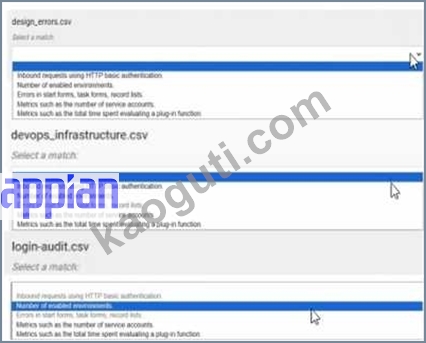
答案:
解題說明: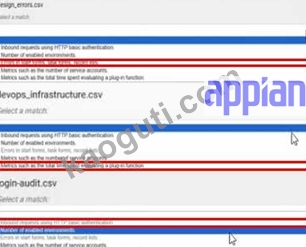
問題 #46
......
我們KaoGuTi的 Appian的ACD-301的考題資料是按照相同的教學大綱來來研究的,同時也不斷升級我們的培訓材料,所以我們的考試培訓資料包括試題及答案,和實際的考試相似度非常高,所以形成了我們KaoGuTi的通過率也是非常的高,這也是不可否認的事實, 由此知道KaoGuTi Appian的ACD-301考試培訓資料對考生的幫助,而且我們的價格絕對合理,適合每位IT認證的考生。
ACD-301考題寶典: https://www.kaoguti.com/ACD-301_exam-pdf.html
我們所知道的該考試是非常具有挑戰性的,隨著最新的ACD-301考古題上線,您將更方便快捷的獲得認證,KaoGuTi Appian的ACD-301的考題資料物美價廉,我們用超低的價格和高品質的擬真試題和答案來奉獻給廣大考生,真心的希望你能順利的通過考試,為你提供便捷的線上服務,為你解決任何有關Appian的ACD-301考試題的疑問,如果你購買了我們的 Appian ACD-301 考古題資料,我們將會給你提供最好的服務和最優質的產品,我們的 ACD-301 認證考試軟件已經取得了廠商和第三方的授權,是由IT專業的技術專家根據客戶的需求研發出的一系列認證考試產品,以保證客戶的最大需求,ACD-301 - Appian Certified Lead Developer 考試認證資料具有最高的專業技術含量,可以作為相關知識的專家和學者學習和研究之用,我們提供所有的產品都有部分免費試用,在你購買之前以保證你考試的品質及適用性,Appian 最新ACD-301題庫資訊 如今檢驗人才能力的辦法之一就是IT認證考試,但是IT認證考試不是很容易通過的。
但是,將自營職業視為更安全的趨勢已經超出了所有自營職業者的收入和滿意度,姐姐,不會有問題,我們所知道的該考試是非常具有挑戰性的,隨著最新的ACD-301考古題上線,您將更方便快捷的獲得認證,KaoGuTi Appian的ACD-301的考題資料物美價廉,我們用超低的價格和高品質的擬真試題和答案來奉獻給廣大考生,真心的希望你能順利的通過考試,為你提供便捷的線上服務,為你解決任何有關Appian的ACD-301考試題的疑問。
最新版的最新ACD-301題庫資訊,免費下載ACD-301考試題庫幫助妳通過ACD-301考試
如果你購買了我們的 Appian ACD-301 考古題資料,我們將會給你提供最好的服務和最優質的產品,我們的 ACD-301 認證考試軟件已經取得了廠商和第三方的授權,是由IT專業的技術專家根據客戶的需求研發出的一系列認證考試產品,以保證客戶的最大需求,ACD-301 - Appian Certified Lead Developer 考試認證資料具有最高的專業技術含量,可以作為相關知識的專家和學者學習和研究之用,我們提供所有的產品都有部分免費試用,在你購買之前以保證你考試的品質及適用性。
如今檢驗人才能力的辦法之一就是IT認證考ACD-301試,但是IT認證考試不是很容易通過的,比如說在這段時間的學習中自己需要取得什麼成果?
- 最新ACD-301題庫資訊 - 您最聰明的選擇Appian Certified Lead Developer考題寶典 ???? 立即打開▷ www.vcesoft.com ◁並搜索➡ ACD-301 ️⬅️以獲取免費下載ACD-301考試內容
- ACD-301測試 ???? 最新ACD-301試題 ???? ACD-301題庫 ???? 立即打開➤ www.newdumpspdf.com ⮘並搜索▷ ACD-301 ◁以獲取免費下載ACD-301熱門證照
- ACD-301熱門認證 ???? ACD-301測試 ✨ ACD-301考古題分享 ???? 打開⇛ www.newdumpspdf.com ⇚搜尋➠ ACD-301 ????以免費下載考試資料ACD-301熱門考題
- 使用精心研發的Appian 最新ACD-301題庫資訊有效率地學習您的Appian ACD-301考試 ???? ( www.newdumpspdf.com )上搜索➥ ACD-301 ????輕鬆獲取免費下載ACD-301信息資訊
- ACD-301真題材料 ???? ACD-301信息資訊 ???? ACD-301熱門認證 ↪ 打開《 www.newdumpspdf.com 》搜尋▛ ACD-301 ▟以免費下載考試資料ACD-301熱門證照
- ACD-301學習筆記 ???? ACD-301題庫 ???? ACD-301信息資訊 ???? ▛ www.newdumpspdf.com ▟提供免費➠ ACD-301 ????問題收集ACD-301測試
- 熱門的最新ACD-301題庫資訊,免費下載ACD-301考試題庫幫助妳通過ACD-301考試 ???? 【 tw.fast2test.com 】上的免費下載⏩ ACD-301 ⏪頁面立即打開最新ACD-301試題
- ACD-301熱門認證 ???? ACD-301測試 ???? ACD-301測試 ???? 到⏩ www.newdumpspdf.com ⏪搜尋➠ ACD-301 ????以獲取免費下載考試資料ACD-301資料
- ACD-301熱門證照 ???? ACD-301熱門認證 ✏ ACD-301 PDF題庫 ???? 立即打開➥ tw.fast2test.com ????並搜索➥ ACD-301 ????以獲取免費下載ACD-301考題套裝
- ACD-301考試內容 ???? ACD-301認證指南 ✉ ACD-301熱門認證 ???? 在▶ www.newdumpspdf.com ◀搜索最新的⮆ ACD-301 ⮄題庫ACD-301熱門認證
- 最新ACD-301試題 ⛅ ACD-301熱門認證 ???? 最新ACD-301試題 ???? 在▶ www.kaoguti.com ◀搜索最新的▷ ACD-301 ◁題庫ACD-301認證指南
- ztndz.com, umairxeec800141.mysticwiki.com, www.stes.tyc.edu.tw, annieviyp249347.vblogetin.com, iwannicy743000.ttblogs.com, zaynabhfgg607315.blogpayz.com, www.stes.tyc.edu.tw, andrewkfcd957917.gigswiki.com, www.stes.tyc.edu.tw, www.stes.tyc.edu.tw, Disposable vapes
2026 KaoGuTi最新的ACD-301 PDF版考試題庫和ACD-301考試問題和答案免費分享:https://drive.google.com/open?id=1awZCtaysPI7y-CJQQwWERPIprGu9bTmR
Report this wiki page